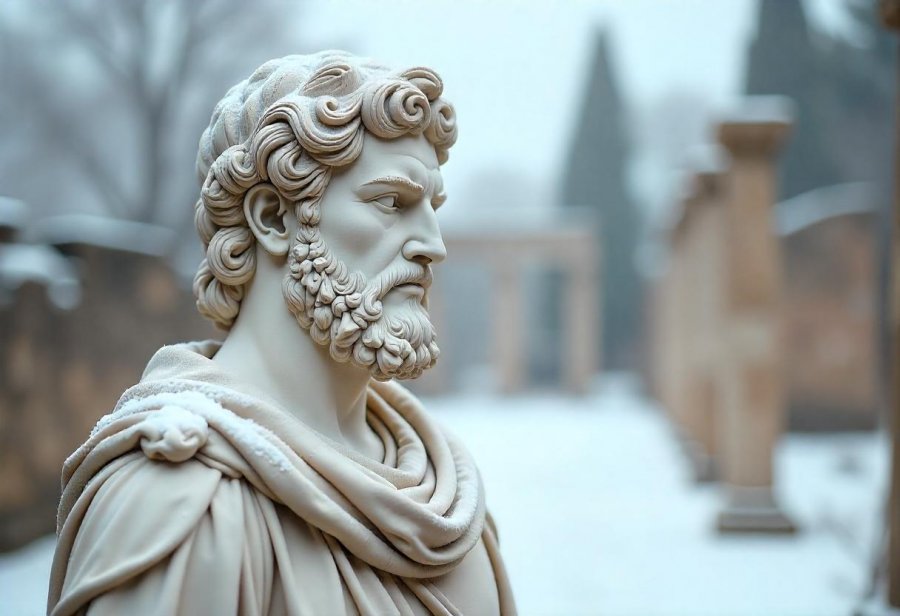




Isaac Newton’s insatiable curiosity transformed our understanding of the universe, turning the mysteries of motion, light, and gravity into scientific laws that still underpin modern physics. But what fuels such relentless inquiry? From humble beginnings in a small English village, Newton’s relentless questioning led to groundbreaking discoveries that unified celestial and terrestrial phenomena, reshaping science from speculation to precision. His laws of motion and universal gravitation aren’t just abstract theories—they’re the foundation of technologies we depend on daily, from space exploration to GPS devices. Yet, Newton’s ideas sparked controversy, debates, and rivalries that pushed science further. His legacy reveals that curiosity, paired with skepticism and rigorous testing, is vital for progress. Could today’s innovations emerge from the same questioning spirit that challenged centuries-old beliefs? Newton’s story invites us to ask—what unanswered questions could unlock the next revolution in understanding our world?
Isaac Newton’s Journey from Curious Child to Scientific Pioneer
Isaac Newton’s journey began in 1643 in a humble village in England, where his curiosity about the world around him quickly set him apart. As a child, he was captivated by how clocks ticked, toys moved, and everyday objects behaved. He often took things apart just to see what made them work, showing an early talent for inquiry and exploration. This natural tendency to dismantle and understand laid the groundwork for a lifelong passion: uncovering the secrets of the universe.
Newton’s relentless curiosity drove him beyond simple observations. He was never content with surface explanations or accepting things at face value. Instead, he asked deeper questions about motion, light, and gravity—seeking answers that went beyond the obvious. His mind was constantly probing, eager to find the underlying principles that governed natural phenomena. This inquisitiveness became the engine behind all his scientific pursuits.
His approach was characterized by a rigorous insistence on evidence and logical reasoning. Newton refused to accept ideas without testing them through observation and experimentation. This mindset helped shift science from philosophical speculation to a systematic discipline rooted in verifiable facts. His dedication to questioning and testing made him a pioneer of the scientific method, emphasizing that curiosity must be paired with skepticism and evidence.
Newton’s curiosity was more than a personal trait; it was a catalyst for revolutionary discoveries. His laws of motion described how objects move and interact, providing a simple yet profound framework that still underpins physics today. His law of universal gravitation unified the celestial and terrestrial worlds, explaining phenomena from falling apples to planetary orbits. These breakthroughs were not just theoretical—they were tangible answers to questions that had puzzled humanity for centuries.
Throughout his life, Newton’s questions pushed the boundaries of knowledge. His work on optics and light opened new frontiers, challenging existing beliefs and sparking debates that expanded our understanding of electromagnetic phenomena. His willingness to explore uncharted territory highlights how curiosity ignites ongoing inquiry, leading to ever more questions and discoveries.
Newton’s insatiable curiosity was not without challenges. He faced opposition from skeptics questioning the universality of his theories and debates over the invention of calculus. Yet, these conflicts fueled further scrutiny and refinement of his ideas. Newton’s openness to debate and critique showed that questioning and revising are vital parts of scientific progress. His relentless pursuit of understanding transformed curiosity into a powerful force that revolutionized science and continues to inspire today.
Revolutionary Discoveries That Transformed Our Understanding of the Universe
Isaac Newton’s scientific breakthroughs did more than introduce new ideas—they transformed our entire understanding of the universe. His laws of motion provided a clear framework for describing how objects move and interact, shifting science from philosophical speculation to a precise, mathematical discipline. Whether explaining why an apple falls or how planets orbit, Newton’s laws made natural phenomena predictable and measurable, laying the foundation for modern physics.
Alongside these laws, Newton’s law of universal gravitation was revolutionary. It revealed that every mass attracts every other with a force proportional to their sizes and inversely proportional to the square of the distance between them. This principle unified celestial and terrestrial physics, explaining why planets orbit the sun and objects fall to Earth. It turned the universe into a coherent, law-driven system, driven by curiosity and mathematical insight.
What set Newton’s theories apart was their challenge to older ideas that celestial bodies followed different rules from objects on Earth. His work demonstrated that the same physical laws applied everywhere, dissolving the divide between heaven and earth. This breakthrough made science a systematic pursuit of understanding, inspiring future generations to see the universe as comprehensible and governed by consistent laws. Newton’s relentless questioning and mathematical rigor transformed science into an evidence-based enterprise.
Newton’s curiosity extended into optics and the nature of light, opening new frontiers. His experiments and theories about light, color, and electromagnetic phenomena sparked ongoing questions and further exploration. Although initially debated, his work expanded knowledge about light and laid the groundwork for future discoveries in physics. These investigations exemplify how curiosity fuels continuous inquiry—each answer leading to new questions.
The impact of Newton’s theories extends beyond pure science into technology and everyday life. Engineers rely on his principles to design safer bridges, resilient skyscrapers, and efficient vehicles. Space agencies depend on his understanding of gravity to navigate satellites and spacecraft. These practical applications show how curiosity-driven discoveries shape tools and systems that define our modern world.
Even as physics advances into relativity and quantum mechanics, Newton’s laws remain remarkably accurate for most everyday and engineering scenarios. They serve as a reliable foundation for understanding motion and force, illustrating how curiosity’s power produces lasting, versatile knowledge. Newton’s pursuit of understanding continues to underpin innovations and technological progress.
His breakthroughs also paved the way for scientific progress in diverse fields. From aerospace engineering to energy research, Newton’s principles remain central to experimental design and data analysis. His emphasis on evidence and mathematical modeling shifted science toward a more systematic approach, fostering a culture of inquiry that persists today.
In essence, Newton’s scientific discoveries didn’t just add to our knowledge—they revolutionized how we see and study the universe. His curiosity-driven breakthroughs transformed science from speculation into a rigorous, predictive discipline. Their enduring influence underscores the vital role of curiosity in pushing the boundaries of human understanding and shaping the innovations that continue to advance our world.
Overcoming Challenges and Debates That Shaped Newton’s Legacy
Newton’s revolutionary theories did not go unchallenged in his time. Many critics questioned whether his laws of motion and universal gravitation could truly apply in all situations, especially in complex or fluid systems that didn’t seem to fit neatly into his mathematical framework. Some argued that while his principles worked well for planetary motion and falling objects, they might break down amid turbulence or in the presence of other forces, sparking ongoing debates about their scope and limitations.
A key controversy involved the development of calculus. Gottfried Wilhelm Leibniz independently claimed to have invented it around the same time as Newton, igniting a fierce rivalry. This dispute wasn’t merely about mathematics; it reflected deeper philosophical disagreements about the nature of motion, infinity, and how best to understand the universe. The rivalry underscored how scientific progress often involves intense debate, which can both hinder and accelerate understanding through rigorous testing and refinement.
Newton’s ideas also faced scrutiny from religious and philosophical critics. Some believed that relying solely on mathematical laws to explain natural phenomena risked marginalizing divine intervention or spiritual explanations. There was concern that emphasizing empirical evidence might challenge traditional beliefs about a divine order, leading to resistance from those wary of science encroaching on spiritual authority. These tensions blurred the lines between science and theology, complicating the acceptance of Newton’s theories.
Despite these challenges, Newton’s theories gradually gained widespread acceptance, but the controversies spurred further investigation. His work on light and optics, for example, was met with skepticism and required additional experiments before it was fully embraced. Such debates pushed scientists to test, verify, and sometimes refine his ideas, reinforcing the scientific process itself. They demonstrated that questioning and critical evaluation are essential to scientific progress.
Newton’s willingness to engage with opposition and acknowledge the provisional nature of scientific knowledge set an important precedent. His openness to debate and critique showed that science advances through scrutiny, not dogma. The disputes surrounding his work didn’t diminish his legacy; instead, they highlighted that curiosity and skepticism are vital for deeper understanding. These debates helped shape a scientific culture rooted in evidence and continual questioning.
Today’s scientific landscape owes much to the challenges faced by Newton’s theories. The controversies compelled scientists to rigorously test and verify ideas, strengthening the foundations of modern physics. They remind us that progress often involves disagreement and debate—elements that drive refinement and innovation. Newton’s story illustrates that questioning authority and embracing criticism are crucial steps toward truth.
In the end, the conflicts and critiques surrounding Newton’s work did more than create controversy—they contributed to the evolution of science itself. They fostered a culture where ideas are continuously challenged and improved, ensuring that scientific knowledge remains dynamic and robust. Newton’s legacy lives on, not only through his groundbreaking theories but also through the vigorous debates that helped shape a disciplined, evidence-based approach to understanding the universe.
Practical Applications: How Newton’s Laws Power Our Modern World
Newton’s laws of motion and his law of universal gravitation form the backbone of countless applications that shape our modern world. Engineers rely on these principles to design safer bridges, resilient skyscrapers, and efficient vehicles. By understanding forces and movement, they ensure structures can withstand stress and operate reliably, making our infrastructure both safer and more sustainable. These laws provide a predictable framework that helps prevent disasters and improves everyday safety.
In space exploration, Newton’s insights are indispensable. Satellites, rockets, and spacecraft depend on precise calculations rooted in his laws to navigate and orbit Earth accurately. Space agencies plan trajectories and maneuvers using Newtonian physics, enabling us to explore beyond our planet and maintain communication networks that are vital to daily life. The ability to send and control spacecraft hinges on curiosity-driven science, turning theoretical laws into practical tools for discovery.
Everyday technologies also owe much to Newton’s discoveries. Smartphones utilize accelerometers and gyroscopes based on his laws to detect movement and orientation. GPS systems depend on Newtonian physics to determine precise locations and optimize routes. These tools, integral to modern life, are built on centuries-old principles that continue to evolve, demonstrating how curiosity-driven science directly translates into tangible benefits.
Beyond devices, Newton’s influence extends into scientific research and education. His methodology—emphasizing observation, experimentation, and mathematical modeling—shifted science toward a systematic approach. This legacy underpins innovations in aerospace, robotics, and renewable energy, fostering a culture of inquiry and technological progress. Today’s engineers and scientists build on his curiosity-driven framework to push forward new frontiers.
Despite advances like relativity and quantum mechanics, Newton’s laws remain remarkably accurate for most practical purposes. They serve as a reliable foundation for understanding motion and force in everyday and engineering scenarios, demonstrating that curiosity’s power endures. His discoveries continue to inspire innovations that improve safety, efficiency, and understanding, proving that questions sparked by curiosity can lead to lasting, transformative progress.
The Enduring Impact of Newton’s Curiosity on Science and Humanity
Newton’s relentless curiosity did more than lead to groundbreaking theories; it fundamentally transformed how humans approach understanding the universe. His drive to ask questions, seek evidence, and challenge assumptions laid the groundwork for the scientific method we rely on today. This mindset of inquiry has continued to inspire scientists, engineers, and thinkers across generations, fueling discoveries and technological advances that shape our world. Newton showed us that asking the right questions and pursuing honest answers can unlock profound truths about the natural order.
His legacy is a testament to the power of curiosity as a catalyst for progress. By pushing beyond accepted ideas and embracing experimentation, Newton turned science from a philosophical pursuit into a systematic, evidence-based enterprise. His approach encouraged others to follow suit, fostering a culture of inquiry that remains at the core of scientific discovery. Today, curiosity continues to drive innovation, inspiring new generations to explore the unknown and challenge existing boundaries.
Newton’s story also highlights that curiosity isn’t solely about individual achievement; it’s about inspiring collective progress. His questions about the universe sparked a cascade of discoveries that continue to influence fields ranging from medicine to space exploration. His example demonstrates that persistent questioning, paired with rigorous testing, can lead to insights that endure and reshape entire disciplines. The curiosity he embodied remains vital as we face complex challenges and seek innovative solutions.
Moreover, Newton’s legacy teaches that curiosity and humility go hand in hand. Despite his monumental accomplishments, he remained open to debate, refinement, and correction—values that keep science dynamic and evolving. His willingness to question his own ideas and accept critique exemplifies how curiosity fuels not only discovery but also growth and continuous improvement. This mindset is essential for navigating a world where knowledge is ever-expanding.
In the end, Newton’s unending curiosity did more than revolutionize physics; it set a standard for how to approach understanding the universe. His example urges us to remain inquisitive, skeptical, and eager to learn—traits that continue to propel human progress forward. His life reminds us that curiosity isn’t just a trait of great scientists but a vital force for discovery and growth in all areas of life. Newton’s enduring influence proves that inquiry, combined with discipline and open-mindedness, can lead to lasting change and a deeper grasp of the world around us.